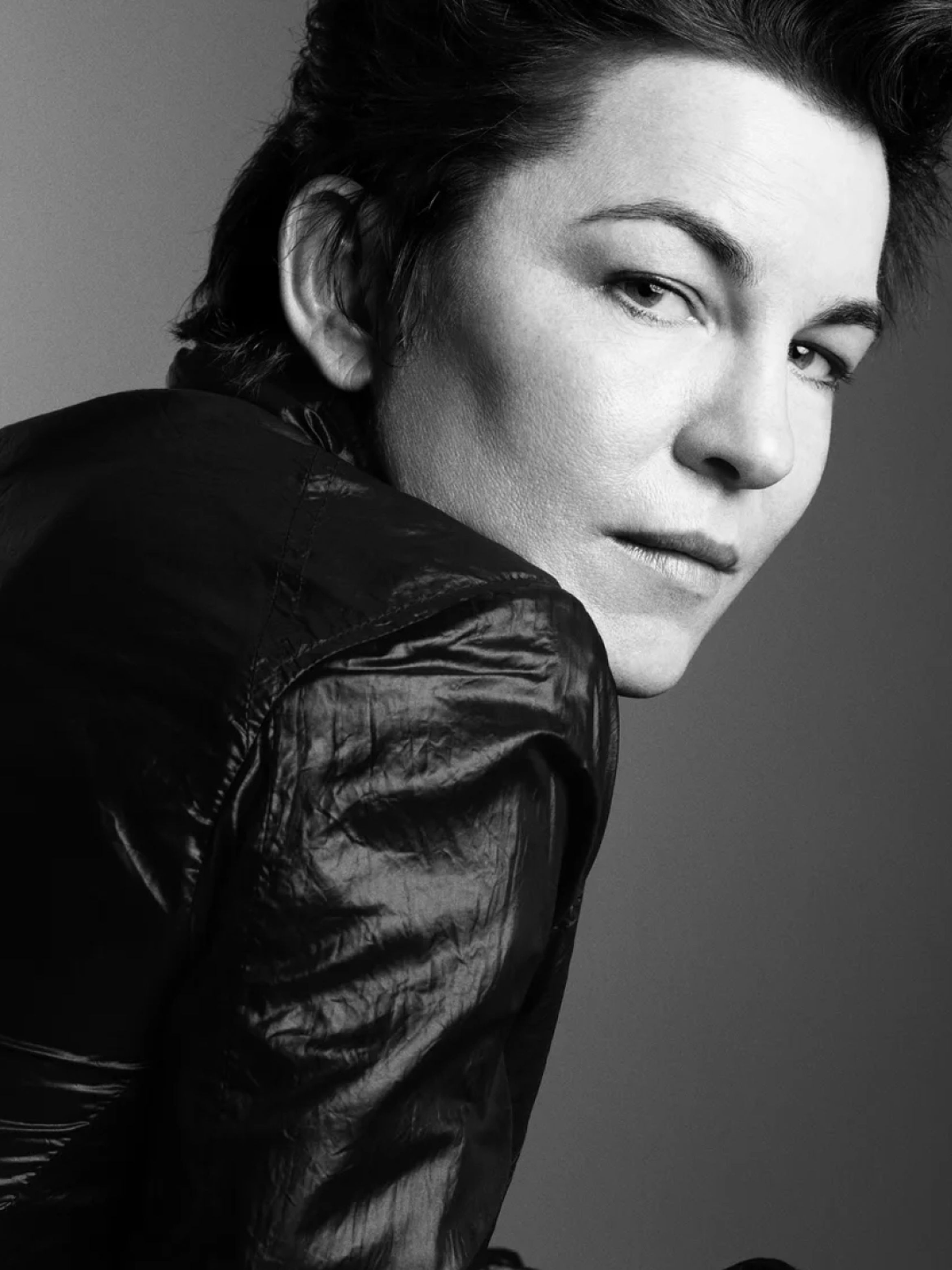
Leonora Carrington was always a rebel. Born in 1917 in rural Lancashire, England, she spent her childhood reckoning with middle/upper-class English etiquette. She was expelled from two schools and found posh English culture restricting and pointless, particularly as a young woman.
Leonora preferred the Celtic myths and fairytales that her Irish nanny would tell her. As a child, she would create her own fantasy worlds, and she loved animals. Looking at her paintings, you can see how much these early influences stayed with her throughout her life.
By the 1930s, Leonora had found like-minded people at art school in London. She first learnt about Surrealism through a book and was particularly taken by a work by German artist Max Ernst called Deux enfants sont menacés par un rossignol (Two Children Are Threatened by a Nightingale), 1924.
Then, at a dinner party in 1937, Leonora and Max met and fell madly in love. Leonora was 20. Max, 46. He was also still married. Against the wishes of Leonora's father (who tried to get Max arrested for painting 'pornographic' images), the couple eloped to Paris.
In Paris, Leonora felt free to express her creativity and was friends with Picasso, who lived down the road. But things were almost too good to be true.
Temple of Peace, Leonora Carrington, 1954
Deux enfants sont menacés par un rossignol, Max Ernst, 1924
In 1939, World War II broke out, and the Nazi forces imprisoned Max. Leonora was left alone, totally heartbroken. She moved to Spain to try and escape her grief but had a breakdown and was admitted to an asylum – which she remembered as a very cruel and difficult place.
After her recovery, things went Leonora's way again. In a cafe in Madrid, she bumped into a Mexican diplomat, Renato Leduc, who Picasso had introduced her to in Paris. He said if they got married, she could live in Mexico. So Leonora made the intrepid journey by boat across the Atlantic. She first went to New York, where she hung out with the likes of Marcel Duchamp, André Breton and Hermann Landshoff. And then she went on to cross the border down to Mexico.
When Leonora and Renato got to Mexico in 1942, Leonora divorced him. She'd finally found her home and didn't need anything but herself and the city.
Green Tea, Leonora Carrington, 1942
The Kitchen Garden on the Eyot, Leonora Carrington, 1946
In her lifetime, she became hugely famous in Mexico but less so in her home country, England. "Well, I think it's never too late to mend," she reflects in a BBC documentary about the artist, "to mend the fact that I'm ignored in my own country."
Interestingly, back when Leonora first discovered Surrealism, she said, "Yes, this is familiar" – Mexico City was the same. It was somewhere totally different, but it felt like home. Her paintings kind of follow the same logic. Her vast dreamworlds are comforting and unsettling at the same time – like a fairytale or falling in love.
But be warned. Leonora doesn't want you to overthink her paintings…
"You're trying to intellectualise something, desperately, but you're wasting your time," she says in an interview from the later stages of her life. "I often feel I am being burned at the stake just because I have always refused to give up that wonderful, strange power I have inside me."
That power has made Leonora one of the most fascinating Surrealists of them all. Her work is now celebrated across the world, and her legacy has made her a true art legend.
The Meal of Lord Candlestick, Leonora Carrington, 1938
The Pomps of the Subsoil, Leonora Carrington, 1947