Ahead of our first collaboration, American artist Maxwell Mustardo invited us into his rural Quakertown studio – a forest hideaway brimming with lurid ceramics that seem as likely to have emerged from a fairytale as from a kiln.
Enticed by his uniquely-anthropomorphic forms, we talked to Maxwell about the origins of his artistic practice, the inspirations that underpin it, his reverence for the footprints of human culture and leaning into his obsessive tendencies.
Discover our first collaboration with Maxwell, Pottery.
You grew up in Quakertown, New Jersey. How has it shaped your practice?
I grew up with a lot of time spent in the forests nearby my home, interacting with nature and letting my imagination carry things forward. My parents are both fine art photography conservators and imprinted on me a certain reverence for artefacts of human culture. When I began working in clay during high school, I learned that there was a ceramic studio less than two miles from my childhood home. This remarkable studio, once a home-base for one of the 20th century's most excellent ceramists, provided a revelation that a life spent working with clay could be both sustainable and fulfilling.
What led you to clay?
I took ceramics on a whim in high school. The first pieces I made, for many, many years, were a variety of rather un-impressive pots and lumpy simple forms. Working with clay has always been extremely pleasurable, though with diminishing returns at each stage from wet work to dry clay, to glazing, to fired object. It is only recently that the finished pieces have become as exciting as the process of making them.
Where do you find inspiration?
Everything happens in the studio. Embryonic ideas can come at different times – moseying in a museum, conversing with friends or drawing at night – but everything gets fleshed out in the studio through physical trials.
Which artists – past or present – have inspired your work?
Historic heavy hitters would include Francis Bacon, Picasso, Ken Price, Toshiko Takaezu, Yagi Kazuo, Betty Woodman and Oscar Peterson.
In the contemporary scene – Del Harrow, Takuro Kuwata, Francesca DiMatteo, Genesis Belanger, Masaomi Yasunaga and Daniil Trifonov. That said, I'm as interested in the more anonymous products of various cultures throughout history as I am in these truly remarkable individuals.
Three Figures (Left panel), Francis Bacon, 1963
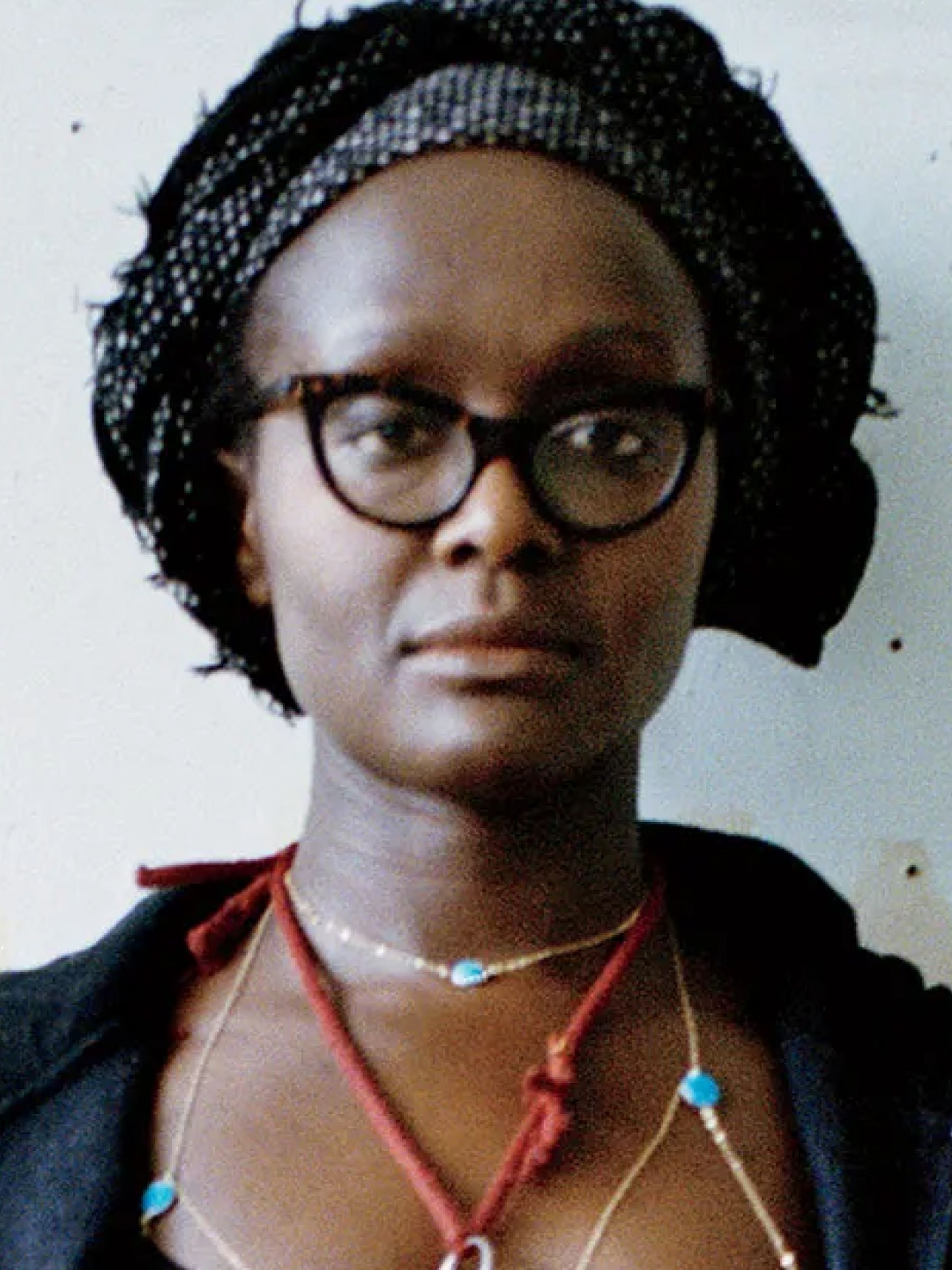
Genesis Belanger in her studio, 2018
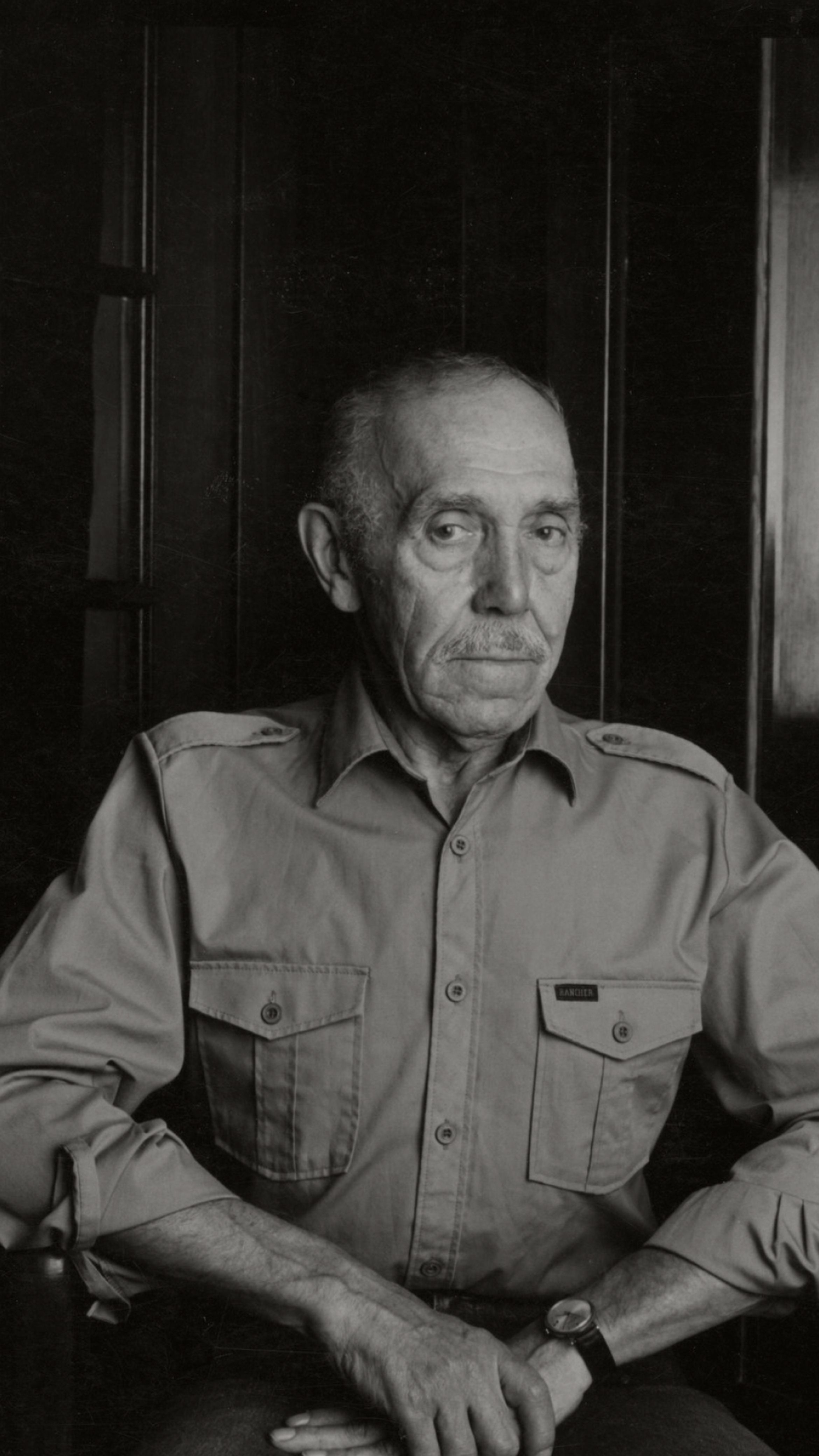
Toshiko Takaezu outside her studio, 1990
A Sweet Vase and Its Shadow, Betty Woodman, 1983
Tell us about the different steps involved in creating one of your sculptures.
New series begin on paper, in very simple drawings. Clay sketches are next, pulling a drawing into 3D and thinking through what surfaces are appropriate to fit the form. All of my clay work is built using pinched coils. Finished pieces are glazed and fired to 2300°F. Some pieces are then coated in many thin layers of PVC rubber that is saturated with pigment.
I've learned over years of making that I tend towards a myopic focus on pushing a single element towards its conclusion.
How has your practice evolved?
Since I began making pots in high school things have taken quite a few turns. I've learned over years of making that I tend towards a myopic focus on pushing a single element towards its conclusion. For example, early on, I wanted a celadon glaze to be as juicy and unctuous as possible, or a foliated rim to be as ruffled and fluid to the point that the form – a vase or a bowl – becomes entirely subservient to, and consumed by, this element.
Functional pottery is still my primary concern and subject matter, but I've leaned into my more neurotic and obsessive desires. I continue to work iteratively, in large series of work exploring slight variations of form with a wide variety of approaches to surface.
Where are you currently working?
I'm currently working at the former studio of Toshiko Takaezu. I've worked here on and off for at least 10 years now. Toshiko was a pioneer of 20th century studio ceramics and the studio is half-museum, half-workspace.
Has his practice inspired your own?
Toshiko was an industrious and dedicated maker. I heard the other day about a story where one of her students was somewhat off-put about the poor quality of his glaze brushwork on a few bowls he had made. Toshiko told this student that when she had felt similarly, she collected newspapers and got up at 6AM every morning to practice for an hour with ink and brush — a practice that she attended to for ten years. She was also a very well-regarded professor, cook, friend, gardener, task-master, weaver, etc. I could only aim to have such good range, in addition to such resolution. I admire her very much.
How do you envisage your artworks in people's homes?
One of my favourite things about pots is their situation within domestic spaces. They easily span the familial and nostalgic, cultural and symbolic, personal & mysterious – while being relevant to daily life through function. Even if their function is not always engaged or even practical, the allusion to an object that works and lives intimately alongside us is always vital and stimulating.
Pottery by Maxwell Mustardo
Our first collaboration with Maxwell launches June 1 — a series of original ceramic sculptures cast in a variety of lurid hues. Formed of amphoras, mugs, teapots and pitchers, the collection tugs at the boundary between art and the everyday, as Maxwell continues to question the possibilities of clay.
View the whole series here.
Studio shoot by Todd Midler for Avant Arte